History of Naples
A short story of the city around you.
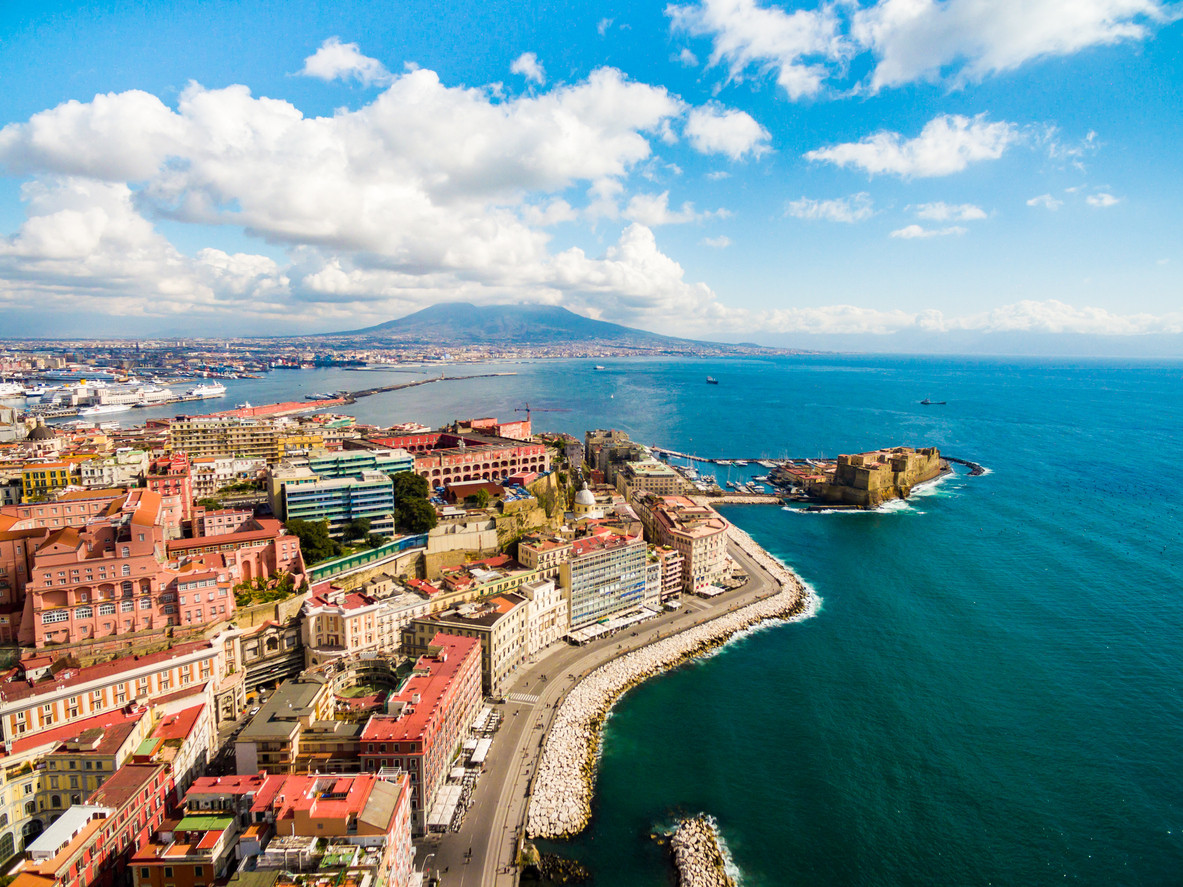
To understand Naples you need to keep just one thing in mind, and hold it tight: for almost seven centuries it was not a city, but the city. A capital. The head of a kingdom that held the whole Italian South together — from Abruzzo to the tip of Calabria — with a king on the throne, a court around him, and the great princes of the South coming to Naples to be seen, to scheme, and to marry into each other's families.
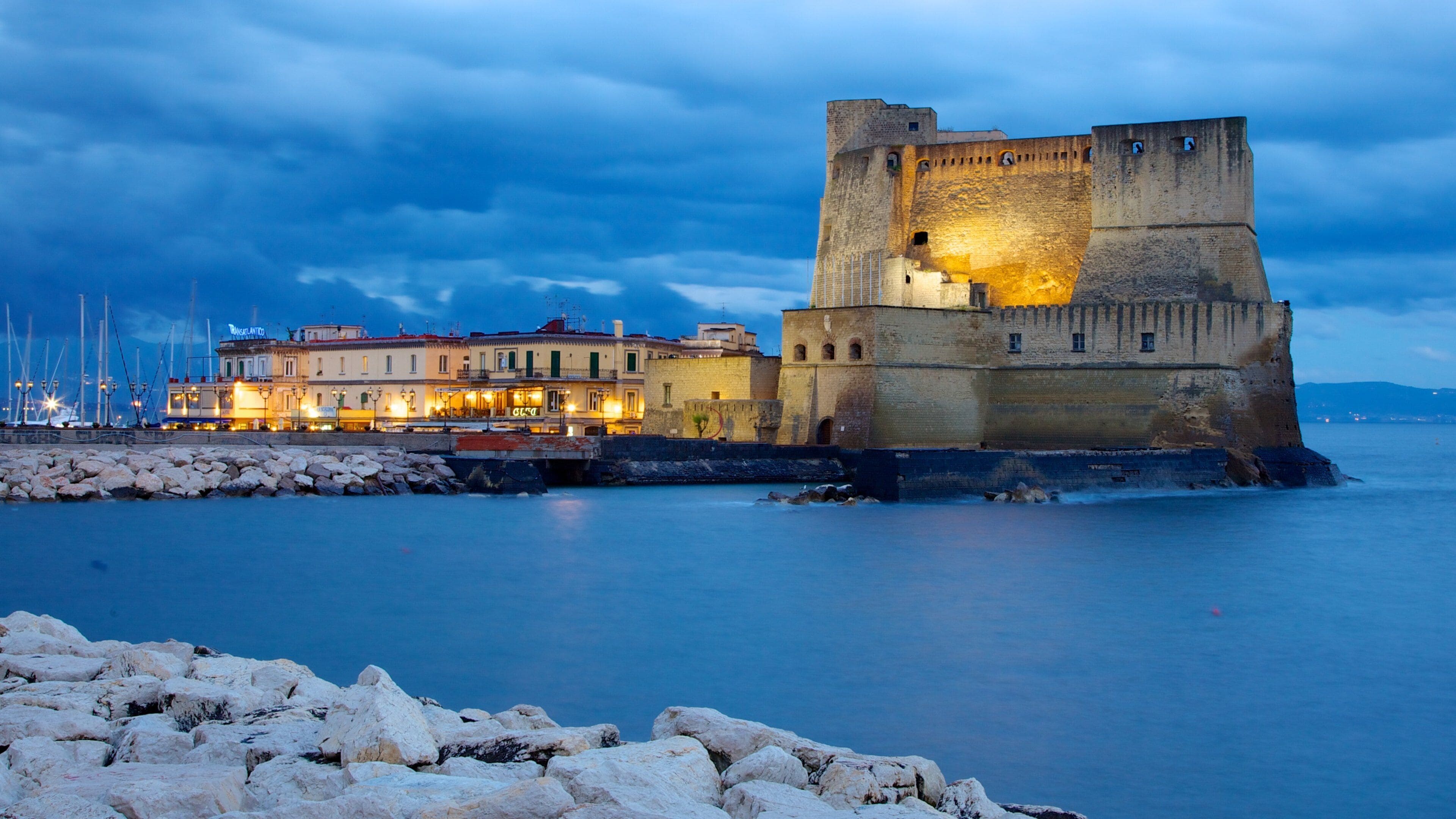
It begins in the thirteenth century. Until then Naples was an important city but not the first: in the South, Palermo mattered more. Then Charles I of Anjou arrives from France, conquers the Mezzogiorno and chooses Naples as his seat. In 1282 the revolt of the Sicilian Vespers tears Sicily from the Angevins and hands it to the Aragonese: the kingdom splits, and Naples becomes — by necessity, and forever — the capital of the mainland. The Angevins rule it for almost two centuries, build the Maschio Angioino as a fortress-palace and begin to turn it into a court that speaks with all of Europe.
In the fifteenth century the Aragonese wrest the crown from the Angevins and make Naples the centre of their Mediterranean. Alfonso the Magnanimous enters the city under a white marble arch carved for the occasion — it is still there, set into the Maschio Angioino — and fills the palace with ambassadors, poets and alliances: marriages arranged with Milan, with Spain, with half of Europe, because a capital is not governed by arms alone, but by weddings and treaties.
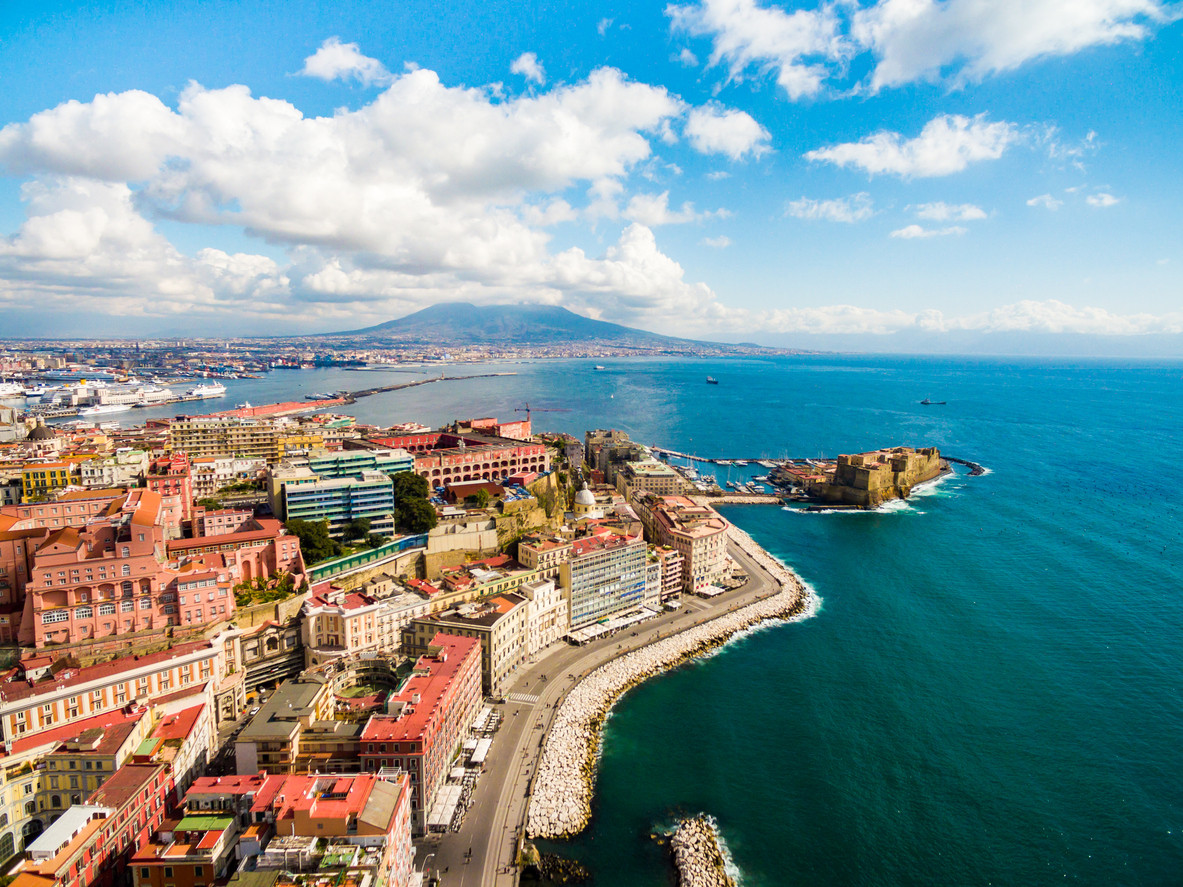
Then for two centuries the king no longer sits in Naples but in Madrid, and governs through his viceroys. Yet the city does not become a province: it becomes enormous. It is the most populous city in Europe after Paris, half a million souls crammed into the alleyways, princes in their palaces a few steps from the common people. A capital that teems, suffocates and dazzles all at once.
The highest moment comes in the eighteenth century. A young man, Charles of Bourbon, gives Naples a king of its own again and an independent crown — no longer ruled from afar, but mistress of itself once more. And Naples behaves like a capital that wants to astonish all of Europe. In 1737 the Teatro San Carlo opens, the grandest and most lavish opera house on the continent, to which the sovereigns of half the world send their musicians. Inside it, in 1770, arrives a child prodigy from Salzburg: Wolfgang Amadeus Mozart, fourteen years old, who wanders the city open-mouthed, listens to the castrati, watches Vesuvius smoke and writes home that Naples is beautiful. Charles meanwhile builds the immense Royal Palace of Caserta to rival Versailles, and brings Pompeii back to light from beneath the ash. For a few decades Naples sets the law in music, theatre and taste: it is one of the true capitals of the world.
Then, in a single night, everything changes. In 1860 Garibaldi marches up the peninsula, a plebiscite delivers the South to the new Kingdom of Italy, and the capital of an ancient kingdom suddenly finds itself a city like any other. The king leaves, the court dissolves, the ministries and banks move north. A long wound begins: without the crown that made it a centre, Naples slides to the economic margins of the country, and anyone who can leaves for America. In terms of money and power, the capital of the South becomes a periphery.
But on another plane it has never given up the throne. Because a city that has been a capital for seven centuries does not forget how beauty is made — and Naples has kept making it without asking anyone's permission. It is the city that gave Italy its greatest and most widely read writers, its song and its music, its theatre, its directors and actors, a cinema and a language that still tell the story of the whole country better than anyone else. It lost the economic crown and kept the one that matters most: it remains, still today, the cultural capital of Italy. The San Carlo raises its curtain as it did in the days of the Bourbons, and it is the oldest opera house in the world still in activity.
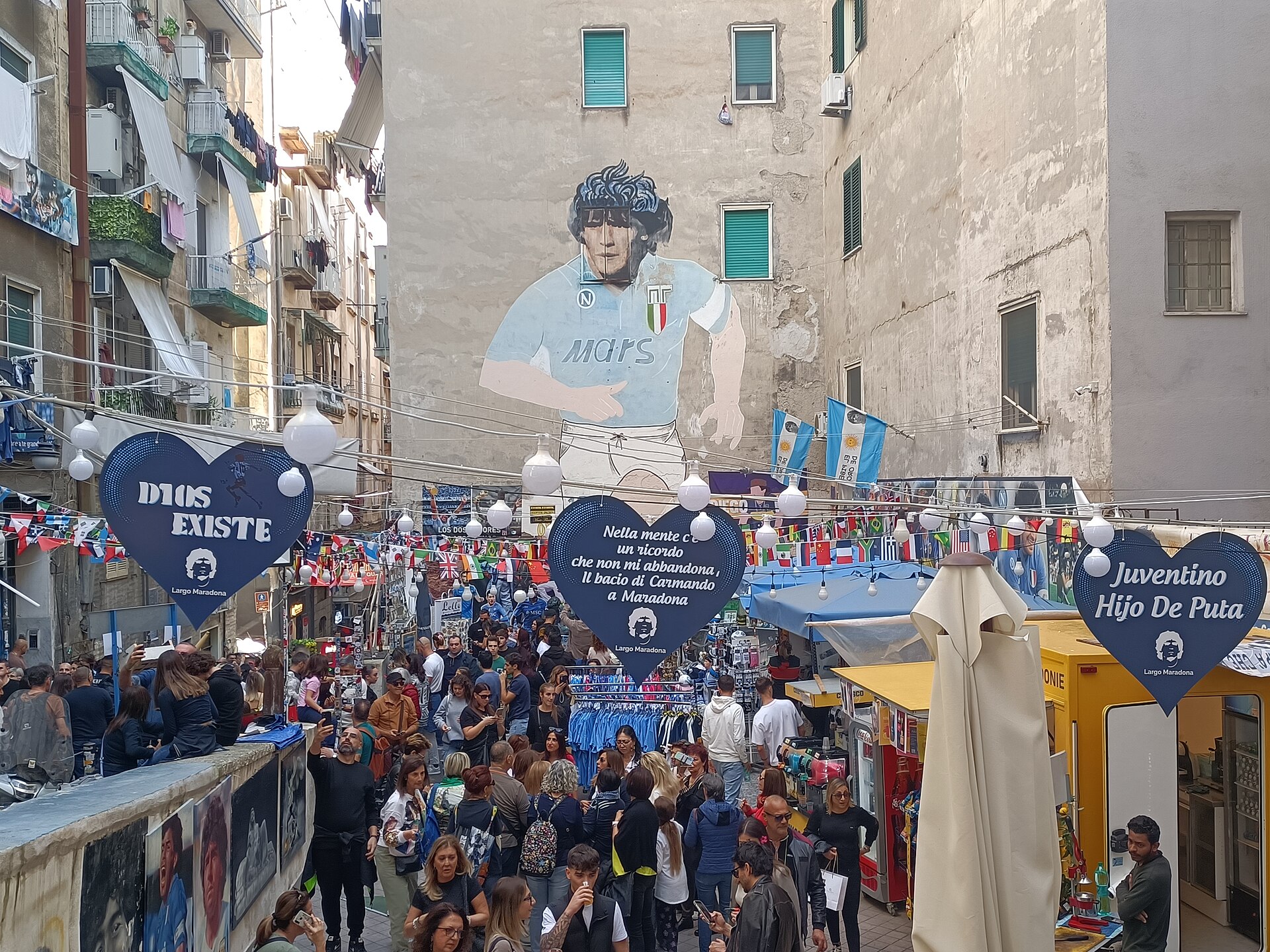
Because a capital is not a capital only while it has a king at its head. It is one as long as it keeps giving the world something the world wants to look at — and Naples, for seven hundred years, has never stopped giving.